After the Clocks Fall Back: Re-Slotting Your Training Week for the Dark
The first Sunday in November didn't take any time away from me. It moved an hour of daylight from the part of the day I trained in to the part I was asleep for, and my schedule took three weeks to notice.
Not medical advice. I'm a regular guy sharing what worked for me — not a doctor, trainer, or dietitian. Full disclaimer
On this page7 sections
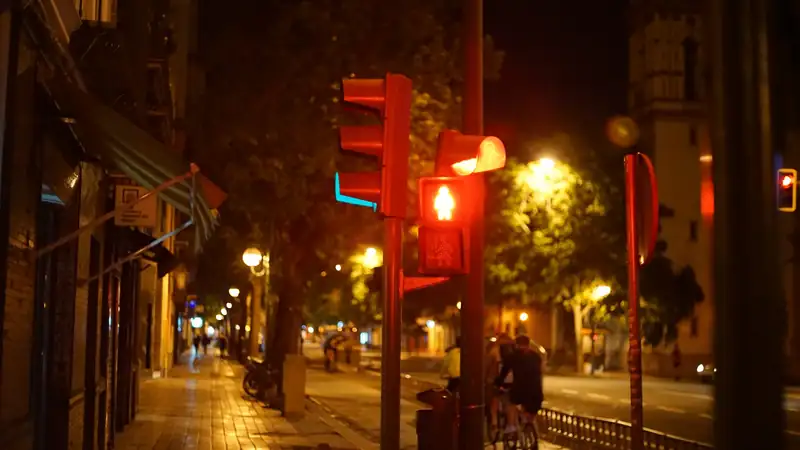
Every fall I make the same mistake, and every fall it takes me about three weeks to see it. The clocks go back an hour on the first Sunday of November, I enjoy the extra hour of sleep like a free dessert, and then my Tuesday-Thursday evening walk-run quietly starts not happening. Nothing dramatic. The slot is still in my calendar. It's just that at 5:45 p.m. it's dark, the street looks different, and the couch looks exactly the same.
The time change doesn't cost you any hours. It moves one — from the evening, where a lot of us train, to the morning, where most of us are asleep or making lunches. So the fix isn't motivation. It's a schedule audit: go slot by slot, figure out which of your training times just changed character, and re-plan the ones that did before the three-week drift gets there first.
That's what this is. Plus two things I didn't know until I went looking: how much more dangerous the dark is for anyone on foot, according to federal crash data, and why the reflective vest most guys buy is the least effective way to wear reflective material.
What actually moved
The rule is simple. Under the Energy Policy Act of 2005, daylight saving time ends at 2:00 a.m. local time on the first Sunday of November, when the clock falls back to 1:00 a.m., and it returns on the second Sunday of March (NIST).
Here's what that looks like where I live in North Carolina, worked out from the standard solar-position formulas for Charlotte. Your ZIP code will be off by some minutes, not by hours. On the Saturday before the change, the sun sets around 6:29 p.m. On Sunday it sets around 5:28. It keeps sliding until it bottoms out a little after 5:10 in early December, and it doesn't get back to 6:00 p.m. until around the second week of February. Sunrise jumps the other way, from roughly 7:43 to 6:44 a.m., which is nice for about six weeks until it drifts back past 7:15 by the solstice.
The slot audit
Take whatever you actually do, not what the plan says you do, and put each session into one of four slots. Here's how each one changes in November, from my own logs and from what the research says about the specific risk each slot carries.
| Slot | What changes in November | Real risk | My verdict |
|---|---|---|---|
| Early morning outdoors (5:30–6:30 a.m.) | Gets brighter for a few weeks, then dark again by December | Low sun glare at dawn; colder air | Keep, but plan for dark by mid-December |
| Lunch (noon–1 p.m.) | Nothing, which is the point | The only fully daylit slot all winter | Best new home for outdoor cardio |
| After work outdoors (5–7 p.m.) | Flips from daylight to dark overnight | Highest pedestrian-fatality window of the day | Move indoors, or run it with real visibility gear |
| Late evening indoors (8–9:30 p.m.) | Nothing outside, but the dark pulls bedtime earlier | Hard sessions too close to bed | Fine for lifting; end vigorous work an hour before bed |
The lunch slot is the sleeper here. I wrote up a 20-minute lunch workout that doesn't need a shower, and from November to February it doubles as the only outdoor exercise window I can count on seeing daylight in. If your job allows even three lunch walks a week, that's most of the 8,000-step habit covered in the one slot the clock change can't touch.
The part of the dark nobody puts in a fitness article
I'd always filed "running at night" under mild inconvenience. Then I read the federal numbers, and I changed how I do the after-work slot.
The National Highway Traffic Safety Administration's most recent pedestrian fact sheet counts 7,080 pedestrians killed in U.S. traffic crashes in 2024. Seventy-six percent of those deaths happened in the dark, versus 20 percent in daylight. The single worst three-hour block was 6:00 to 8:59 p.m., with 24 percent of the deaths, and 73 percent happened away from intersections (NHTSA, 2026). That describes a guy on a road shoulder at 6:15 on a November evening better than I'd like.
The time change itself shows up in the data too. A 2025 study in the Journal of Safety Research looked at fatal crashes in the five weeks either side of each clock change from 2010 to 2019 and found fatal crashes involving pedestrians and cyclists rose 13 percent after the fall change. The authors attribute the pattern to the changed light conditions, not to people losing sleep (Woods et al., 2025). An older study that used the clock changes the same way estimated that pedestrians are roughly 3 to 6.75 times more vulnerable in the dark than in daylight, depending on circumstances (Sullivan and Flannagan, 2002).
Where the reflective stuff actually goes
This is the part I wish someone had told me before I bought a reflective vest.
Researchers at Queensland University of Technology and Clemson have spent two decades measuring how drivers actually see pedestrians at night. In one closed-course study, drivers recognized only 5 percent of pedestrians in the worst condition (black clothing, low beams, oncoming glare), and 100 percent of pedestrians wearing retroreflective material arranged to show "biological motion": strips on the ankles, knees, wrists and elbows, the parts that move when a person walks. That was without glare (Wood et al., 2005).
The follow-up is the one that made me rethink the vest. In a 2017 study, drivers approached pedestrians wearing a standard reflective vest over black clothing, with or without extra reflective markers on their limbs. With the vest alone, drivers recognized a pedestrian at an average of 184.5 meters. With the limb markers added, 319.1 meters. They could tell which way the pedestrian was facing at 95.6 meters with the vest alone and 215.4 meters with the markers (Wood et al., 2017).
The mechanism is almost poetic. The human visual system is extremely good at recognizing a person from a few moving points of light, so reflectors on the joints don't just make you brighter, they make you read as a person sooner. A vest makes you a bright rectangle. The same research group's review adds the uncomfortable part: pedestrians consistently overestimate how visible they are at night (Tyrrell et al., 2016). I certainly did. I thought my gray running jacket was "light-colored." At 200 yards in low beams, it's a shadow.
Moving the evening slot without wrecking sleep
The other way to handle the after-work slot is to bring it indoors and push it later. The garage, the basement, the gym after dinner. I used to worry that training at 8:30 p.m. would wreck my sleep, and that turns out to be mostly folklore.
A 2019 meta-analysis in Sports Medicine pooled 23 studies of healthy adults and concluded that the evidence does "not support the hypothesis that evening exercise negatively affects sleep, in fact rather the opposite." The one exception: vigorous exercise that ends an hour or less before bedtime may make it harder to fall asleep and cut total sleep time (Stutz et al., 2019). So a lifting session that wraps up by 9:00 for a 10:30 bedtime is fine. Hard intervals at 10:15 are a different story.
The bigger sleep risk in November is the drift the other way. The dark pulls bedtime earlier, then a late session plus a scroll pushes it later, and wake time wanders. The CDC's baseline is 7 or more hours for adults 18 to 60, and it lists going to bed and getting up at the same time every day as one of the core habits. My fix is the one I logged in the fixed wake time experiment: anchor the wake time, let bedtime settle around it, and don't renegotiate either one when the clocks change.
My re-slotted week, as a worked example
Here's what my October week looked like and what it becomes from the first Sunday in November through the end of February.
| Session | October slot | November–February slot | What made it work |
|---|---|---|---|
| Walk-run #1 | Tue 5:30 p.m., road loop | Tue 12:15 p.m., 25-minute walk near work | Daylight, no gear needed |
| Walk-run #2 | Thu 5:30 p.m., road loop | Thu 5:45 p.m., sidewalk-only loop | Ankle and wrist bands, clip light, facing traffic |
| Strength A | Mon 6:00 a.m., garage | Mon 6:00 a.m., garage | Unchanged; indoor slots don't care about the sun |
| Strength B | Fri 6:30 p.m., garage | Fri 8:00 p.m., after dinner | Done by 8:45, well over an hour before bed |
| Long walk | Sat 4:00 p.m. | Sat 10:00 a.m. | Moved to the warmest daylit hours |
Only two of five sessions actually had to move, and one needed gear rather than a new time. That's typical. The mistake isn't that November makes training impossible. It's that nobody re-reads their schedule when the light changes, so the one or two slots that did change fail silently. That's the same failure I described in the maintenance year piece: nothing announces itself, and each skipped Thursday is individually defensible.
If you don't re-slot
- Evening sessions quietly drop from two to one to zero
- You run a familiar road in the dark in a gray jacket
- Bedtime drifts, wake time follows
- You notice around Thanksgiving
If you do
- One outdoor session moves to lunch daylight
- One stays in the evening with joint reflectors and a light
- Indoor sessions end an hour before bed
- The week looks the same in December as in October
The fifteen-minute version
Sit down with your calendar on the Sunday the clocks change, or any day after. For each session, write the slot and circle any that are outdoors between sunset and about 7:30 p.m. For each circled one, pick exactly one fix: move it to a daylit slot, move it indoors, or keep it and buy the ankle bands first. Then set a reminder for the second Sunday in March, when the whole thing runs in reverse and your 6:00 a.m. runs go dark for a few weeks.
Keep reading
The Maintenance Year
My first maintenance year wasn't maintenance. It was decay I hadn't written down. The second one worked, and the difference was one index card.
Sport vs. the Treadmill
My treadmill attendance one winter was 61%. My Tuesday-night league attendance the same month was 100%. Same guy, same fatigue — the only variable was whether seven other men were waiting.
Gym Anxiety Field Guide
Feeling like everyone's watching you at the gym isn't a character flaw — it's the default setting. Here's the field guide I wish someone had handed me: hours, scripts, and a four-visit plan.