Training in a Heat Wave or Deep Freeze: Adjusting Without Quitting
Extreme weather doesn't kill routines by being dangerous. It kills them by being vague. Here are the decision rules I run in August and February.
Not medical advice. I'm a regular guy sharing what worked for me — not a doctor, trainer, or dietitian. Full disclaimer
On this page5 sections
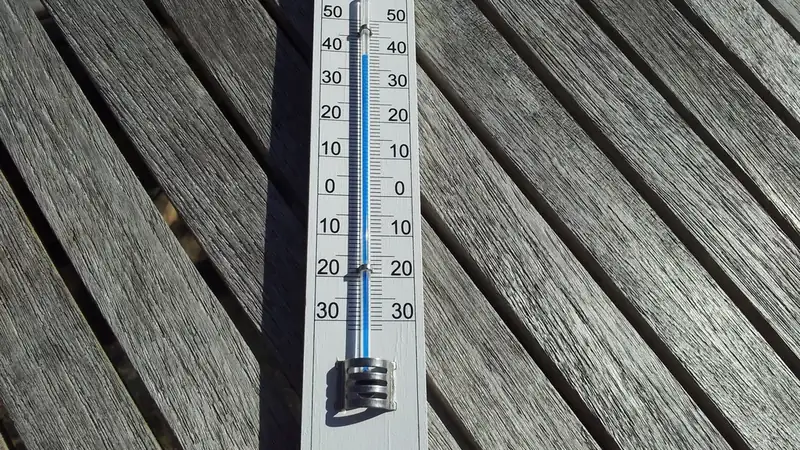
It's late August in Charlotte as I write this, which means my garage gym is running about 88 degrees at 5 p.m. with the door open. In February, the same garage sat at 34. I've trained through both, and I've also quit through both — twice, in earlier years, when a brutal week turned into a skipped week, which turned into a month, which turned into starting over from zero in a new season.
So this is not an article about toughness. It's about the specific, boring mechanism by which weather kills routines, and the decision rules that have kept mine alive through every Carolina summer and cold snap since. The safety parts are sourced to the CDC, because "how hot is too hot" is a question for public-health scientists, not for a guy with a garage thermometer.
Weather doesn't break your body. It breaks your appointment.
Here's what I got wrong for years. I treated a heat wave as a physical problem — can I handle it? — when it's actually a scheduling problem. My whole system runs on fixed workout appointments (the week-3 scheduling rules that saved my routine), and extreme weather attacks the appointment, not the workout. The 5:30 p.m. garage session stops being a settled decision and becomes a fresh negotiation every single day: is it too hot? Should I wait? Maybe tomorrow morning? And a routine that has to be re-decided daily is a routine in week-3 condition, no matter how long you've been training.
The fix follows from the diagnosis: weather is allowed to change the workout — the time, the place, the intensity — but never the appointment. Everything below is just that one rule, worked out in detail for each direction of miserable.
The heat playbook
Translated into my routine, that becomes four rules:
1. Chase the edges of the day. In a Charlotte August, the difference between 6:30 a.m. and 4:30 p.m. is roughly twenty degrees. Here's what that looks like on an actual heat-wave day, with the windows I'll train in marked:
During heat-wave weeks I move my whole schedule to mornings, which my fixed wake time makes automatic — the 6:15 alarm doesn't care what the forecast says.
2. Cut volume before you cut the session. My heat-wave version of a workout is the normal session minus one set of everything, with rests stretched from 90 seconds to two-plus minutes. Call it 70% of normal work. That's still a real session, it keeps the appointment alive, and it respects the fact that everything feels harder at 90 degrees because it is harder.
3. Pre-load the water. The CDC's line is to drink plenty of water and not wait for thirst, so on garage days I start drinking a couple of hours out and keep a bottle by the dumbbells. What I don't do is buy anything: no electrolyte subscriptions, no branded hydration system. Water, earlier than feels necessary, covers a 40-minute session for me.
4. Move the cardio indoors without shame. My walking volume — the 8,000-steps habit — migrates to early morning loops, an air-conditioned mall (genuinely underrated: flat, climate-controlled, free), or laps inside a big-box store while running errands. Steps count wherever they happen.
The freeze playbook
Cold is the easier opponent, mechanically — you can add clothing, but you can't remove skin — yet it killed one of my routines anyway, because a 30-degree garage at 6:30 a.m. is a genuinely hostile negotiating partner. Here's what works.
Dress by the CDC's three layers, then start slightly cold. The CDC's winter guidance describes the layering system: an inner layer that holds heat without absorbing moisture (wool, silk, or polypropylene — not cotton), an insulating middle (fleece, wool, down), and a wind-resistant outer shell. Their less-famous instruction matters just as much for training: excess sweating makes your body lose more heat, so you shed layers the moment you feel too warm. My rule of thumb: if I'm comfortable standing still in the garage, I'm overdressed for the workout. The first ten minutes should be a little chilly.
Extend the warm-up, honestly. My five-minute warm-up becomes ten in winter — jumping jacks, rope skips, and the first exercise done with just body weight until my hands stop feeling like borrowed equipment. Cold-garage lifting with zero warm-up is the only time training has ever made a joint of mine genuinely angry.
Know the two sets of warning signs, and respect them. For hypothermia, the CDC lists shivering, exhaustion, confusion, fumbling hands, and slurred speech — and below a 95-degree body temperature it's an emergency. For frostbite: white or grayish-yellow skin, waxy firmness, numbness. Will a 40-minute garage session in a 34-degree garage get you there? Almost certainly not. But a January walking habit in single-digit wind can flirt with the frostbite list, which is why my sub-20-degree rule is simple: steps happen indoors, and no toughness points are awarded or deducted.
The all-weather fallback: write it down before you need it
Here's the piece I'd nail to the front of this article if I could. Both of my weather-related quits followed the same script: a legitimately bad day ("I'm not training in that") with no pre-decided alternative, so the day became a skip, and the skip set the precedent. The fix is a fallback plan written in advance, on an index card, when the weather is fine and you're feeling reasonable:
- Fallback location: hallway, living room, spare-room corner. My whole 3-day dumbbell plan runs in a six-by-six patch of carpet — a heat wave can take my garage, but it can't take the hallway.
- Fallback session: the minimum-viable workout, defined ahead of time. Mine is one round of the day's five movements, about 12 minutes, air-conditioned and non-negotiable.
- Fallback cardio: mall loop, big-box laps, stairs, or a rope session indoors. Pick yours now, not at 96 degrees.
- The trigger: any day I catch myself negotiating with the forecast, the fallback fires automatically. No fresh decision allowed.
Heat-wave week
- Sessions moved to morning, one set trimmed, rests stretched
- Water starts two hours before the workout
- Walking goes to dawn or the mall
- Any dizziness or weakness ends the session — inside, cool, done
Deep-freeze week
- Three layers, first ten minutes slightly cold on purpose
- Warm-up doubled to ten minutes
- Steps go indoors below 20°F
- Clothes staged the night before; heater on with the coffee
The honest math of a bad-weather month
One last reframe, because it's the one that actually changed my behavior. A heat wave costs you almost nothing physically. Two weeks at 70% volume is a deload, not a setback — lifters schedule those on purpose. What costs you everything is the version where two weeks of skipped sessions dissolve the appointment structure, and you meet October as a guy restarting from zero instead of a guy coming off a light month. I've lived both versions of August. The 70% version feels unimpressive every single day and looks like consistency by Labor Day. The tough-it-out-then-quit version feels principled right up until it doesn't.
The weather is going to win some workouts. Let it win the workout — never the slot.
Keep reading
Gym Anxiety Field Guide
Feeling like everyone's watching you at the gym isn't a character flaw — it's the default setting. Here's the field guide I wish someone had handed me: hours, scripts, and a four-visit plan.
Track This, Ignore That
Years of logs taught me that most fitness numbers are noise wearing a lab coat. Here's the one-question test, the four metrics that pass it, and the five that don't.

Getting Back After a Layoff
Nobody quits fitness once. The pattern that kills comebacks is the same every time — and the fix is a two-week on-ramp your ego will hate and your March self will thank you for.